1994 – 1999 · ~4,871 built
Ferrari 355 Berlinetta
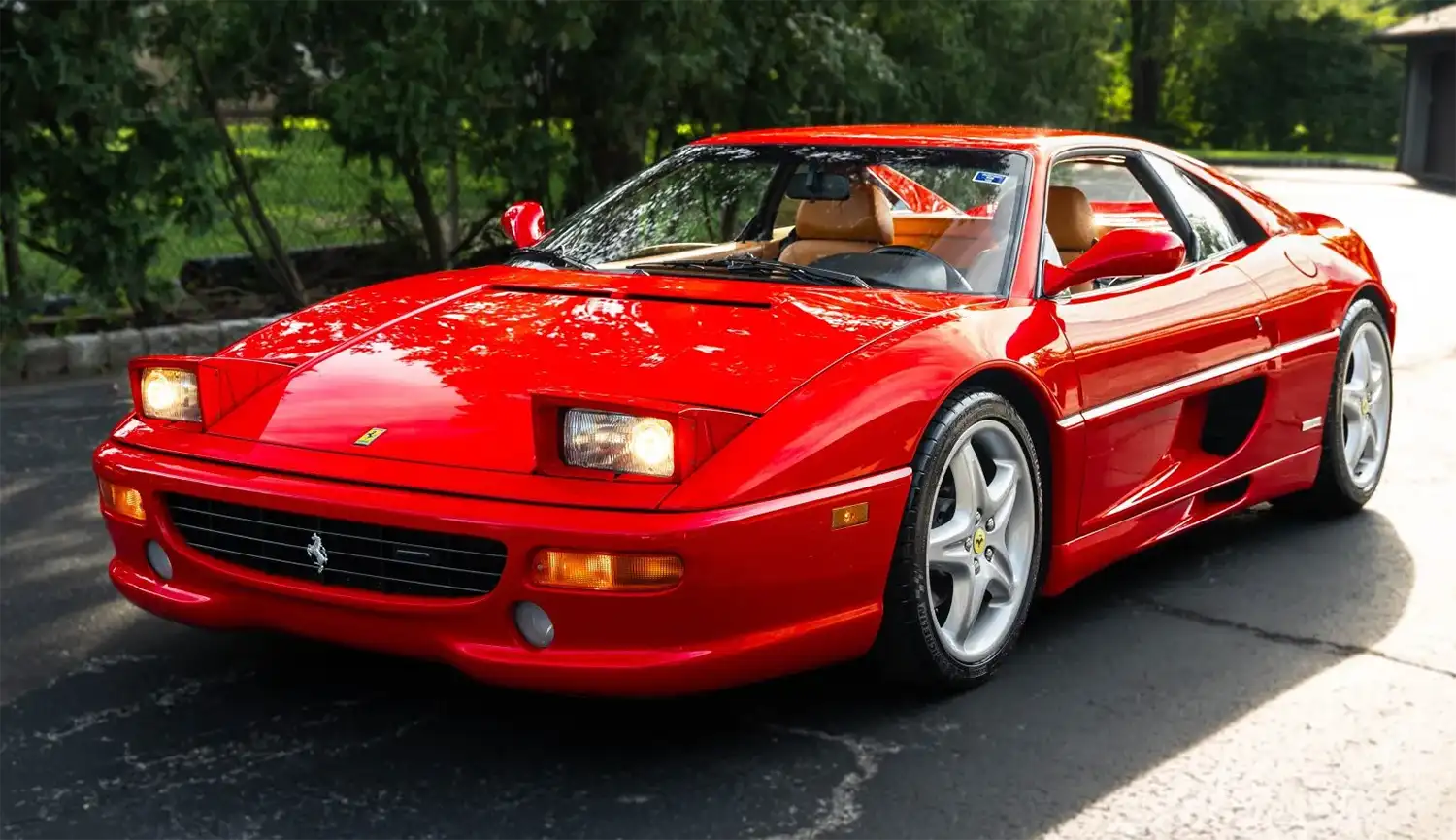
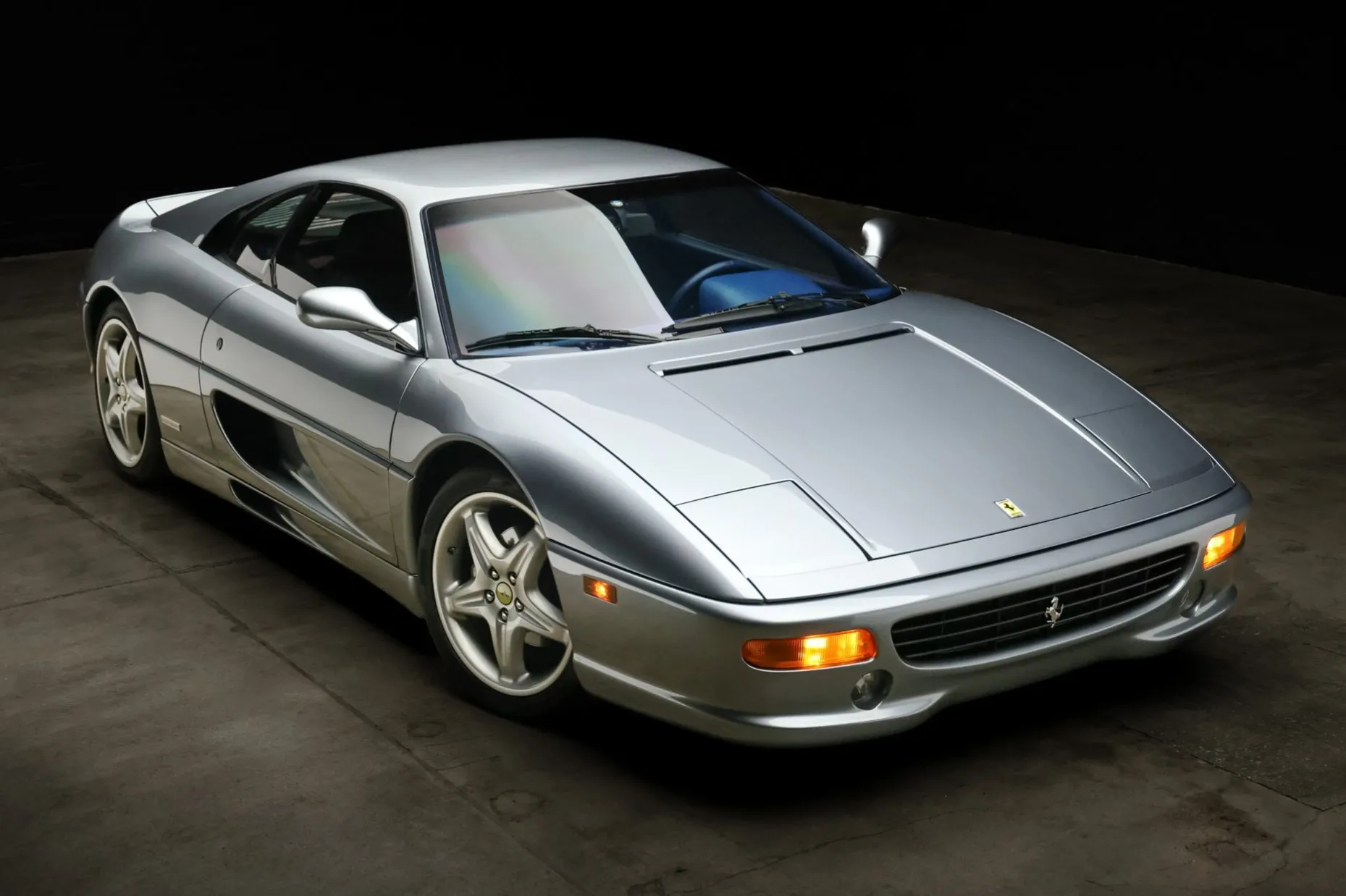
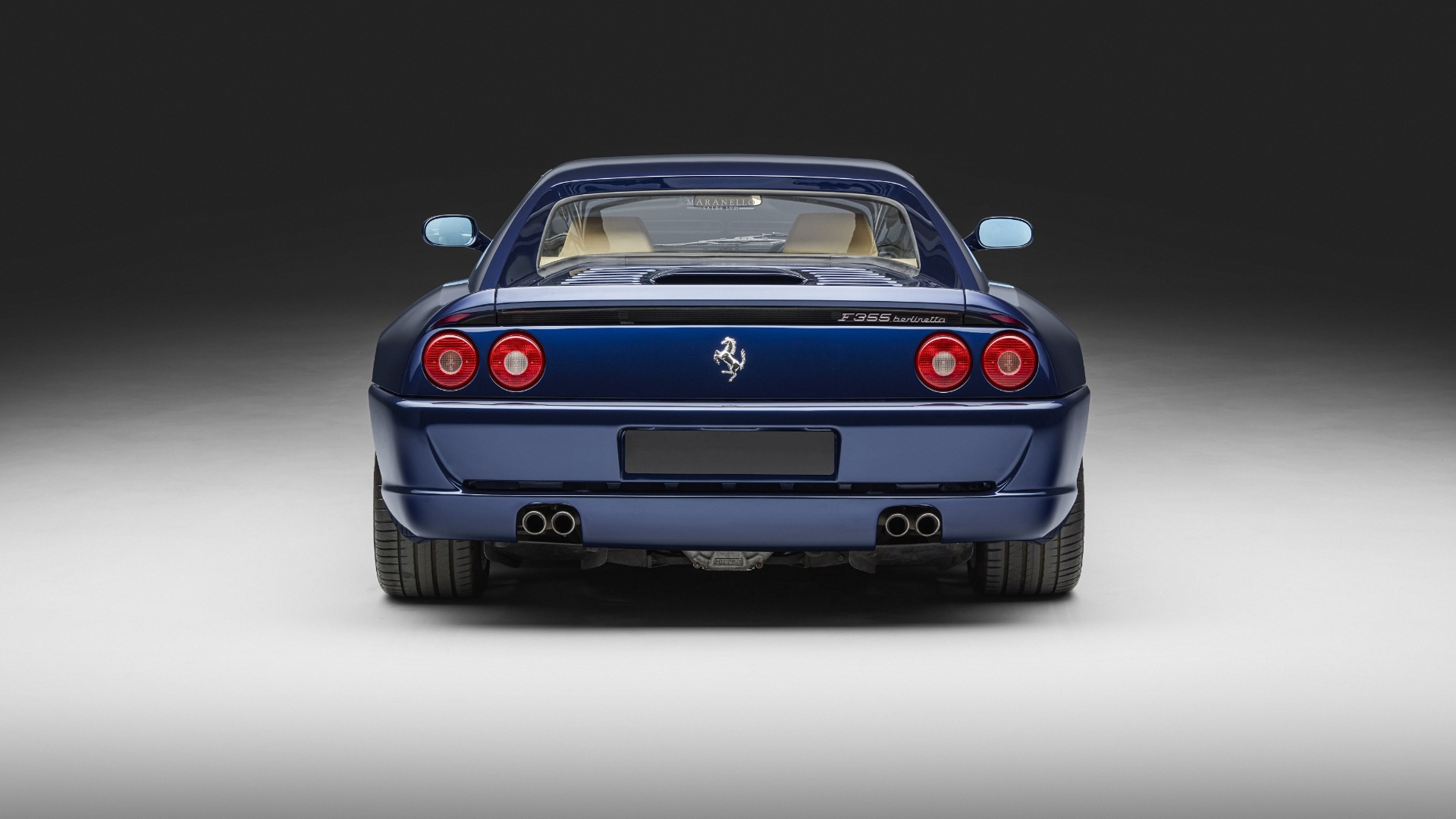
The purist's 355 — fixed roof, lowest weight, the stiffest chassis of the three road cars.
Live market · 355live data
Sold figures are last 12 months. For-sale figures are right now.
- For sale now
- 65
- For-sale median
- $164,852
- Sold (12 mo)
- 104
- Sold median
- $153,931
1.3% of ~4,871 built
Avg $183,674
recorded transactions
Avg $166,741
Specifications
- Engine
- Tipo F129B — 90° V8, mid-mounted, longitudinal
- Displacement
- 3,495 cc (3.5 L)
- Valvetrain
- DOHC, five valves per cylinder (40 valves total)
- Power
- 375 PS (380 hp / 276 kW) @ 8,250 rpm
- Torque
- 363 Nm (268 lb-ft) @ 6,000 rpm
- Redline
- 8,500 rpm
- Transmission
- 6-speed manual (gated) or 6-speed F1 (from 1997)
- Drivetrain
- Rear-wheel drive, limited-slip differential
- Dry weight
- 1,350 kg (2,976 lb)
- Weight distribution
- 42% front / 58% rear
- 0 – 60 mph
- 4.6 seconds
- Top speed
- 295 km/h (183 mph)
- L × W × H
- 4,250 × 1,900 × 1,170 mm
- Wheelbase
- 2,450 mm (96.5 in)
- Fuel capacity
- 82 L (21.7 US gal)
- Boot space
- ~150 L front compartment
- Chassis
- Tubular steel spaceframe, aluminium body panels (some steel)
- Suspension
- Independent double wishbones, electronically adjustable dampers (sport/comfort)
- Brakes
- Vented discs all round — 300 mm front / 310 mm rear, ABS
- Wheels
- 18" five-spoke Speedline (3-spoke Momo on early '94/'95 cars)
- Tyres
- 225/40 ZR18 front, 265/40 ZR18 rear
- Price new
- ~$130,000 USD (1995, US market)
Owners Perspective
What it's like to live with
On the road the Berlinetta is the most communicative 355 — the closed roof gives the chassis a torsional rigidity the open cars can't match. It is also the lightest. If you are buying to drive, this is the one. The trade-off is a more upright, less indulgent character than the GTS; you sit in it like a tool, not a lounge.
What owners love
- The chassis feels noticeably tauter than the GTS or Spider — no roof cut means no compromise. On a B-road the Berlinetta is the one that talks back.
- Visibility forward over that low scuttle is genuinely better than most modern supercars. You can see both front wheel arches.
- The flat-plane V8 wakes up at 6,000 rpm and screams to 8,500. Owners will tell you the second half of the rev range is a different car entirely.
- Gated manual: the click of second-to-third when the oil is warm is the single thing every owner mentions first.
- The shape ages better than almost any '90s supercar. Pininfarina got the proportions right — no fussy lines, no gimmicks.
What owners live with
- Heat soak in traffic. Header insulation cooks, interior plastics cook, and the cabin gets uncomfortable fast in summer if you sit in stop-and-go.
- The header bolts (manifold studs) are a known weak point — many cars have had broken studs and downpipe replacements at some point.
- Sticky interior plastics — the soft-touch coating on the centre console, switches, and door pulls degrades into a goo that has to be stripped.
- Service costs are not a 348 anymore. A major (cam belt + engine-out) is real money. Budget like an exotic, not a classic.
Build variants timeline
What changed, year by year
The 1994 – 1999 production run, in order. Three-spoke to airbag wheel, Motronic 2.7 to 5.2, the F1 gearbox, the Spider, the Serie Fiorano — when each spec arrived.
Read the timeline →
Transmissions
Manual, F1 & conversions
Gated 6-speed manual, F1 paddle-shift automated manual, and the increasingly common F1-to-manual conversion. Different cars to live with, different cars to value.
Read the transmission guide →
Buying tips
- 01Always ask when the cam belts were last done and whether it was engine-in or engine-out. Engine-out is preferred — the only way to do it properly.
- 02Check the headers visually. Cracked or replaced headers, broken manifold studs, and aftermarket downpipes are normal — pretend none of these are deal-breakers, but factor them in.
- 03Inspect the inside of the front bonnet and the boot floor for accident repair — the front clip is structural.
- 04The 1994 and early 1995 cars (Motronic 2.7, no airbag, three-spoke Momo wheel) are the collector specification — see the Engine Variants guide for the full breakdown.
Other models